I Who Have Never Known Men
Jacqueline Harpman
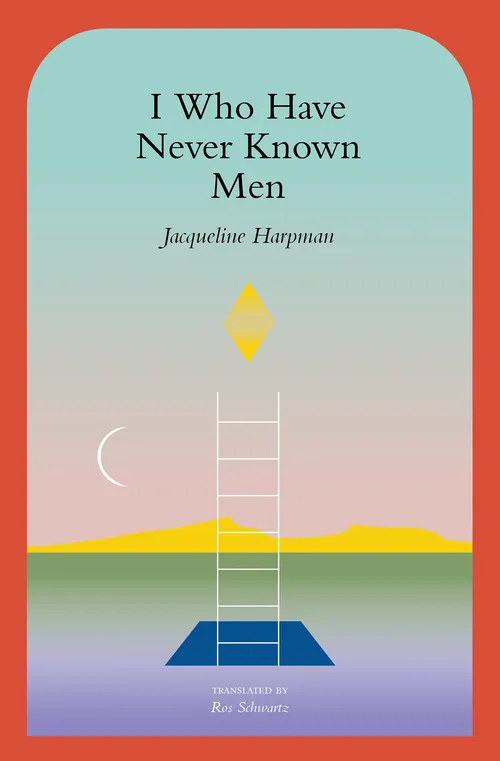
This book HAD ME from the start. I think the title plays with your expectations, and whatever signals you think you might be receiving from the title alone - I'll clue you in on the fact that it's definitely not what you think it is. I think this book works best if you know absolutely nothing about it going in like I did, but even if the premise has been somewhat spoiled, it's perfectly enjoyable.
I'm writing this review quite a few weeks after reading it so it won't be as detailed as I'd like it to be lol nevermind, but I'll attempt to go over some of my favourite parts in the book. All behind spoilers of course, if you haven't read this book I heavily recommend not reading what's spoiled. It's a short read and if you like existentialism, character driven stories and interesting female protagonists go go go read it! Just a warning, it's a bit bleak at times, in terms of actual physical human loneliness.
click to reveal the rest of the review
Characters and the world
There were so many things I enjoyed in this book. First, the narrator aka main character, commonly referred to online as "Child" because she was never given a name. Child is placed in an interesting position, she was the only person in the group of caged women that has never experienced life outside of the cage. The cage is all she knows. Despite this, or rather, in spite of this, she remains as one of the most "satisfying" female main characters I've had the luck of encountering in books. She's inquisitive and adaptable, the boredom she experienced in the cage produced some interesting results such as her ability to count time which follows her all throughout her life. Her unrelenting human desire to know more and to be adventurous and not easily deterred from her goals. Yet she respects community and bonds just as much, seeing how she stayed with all the women until every last one of them died before she embarked on her solitary adventure. When reading about all her thoughts on the society she was never a part of it made me forget I'm reading about a fictional character, she had so much pride and dignity in herself as well which made me love her even more.Second, the other women as a collective. I love that from teenage Child's POV we start out with a negative view of them. With time, as Child matures she also begins to understand them more and grows to care for them and bonds with some more than others. The progression of a developing community post cage breakout, the way rituals like grave digging and communal singing came into play, all managed to capture things humans have nurtured since we existed and to see it repeated in this setting they've found themselves in it is just ugh... so good.
Lastly, I liked the worldbuilding. We only know what Child knows, and the unraveling, or lack thereof, of the mystery is so good. The fact that we don't have all the answers is perfectly fine to me, I like when things are left unsaid (WHEN IT'S DONE WELL), because they're not the whole point of the book. It's the Child that cares about these things, we're more here to follow her on her journey, wherever it may take her. We're here to witness her. But even so, I think the setting is open ended with enough clues for us to theorize on what might've happened and how they got themselves there.
Loneliness and dread
Obviously, loneliness is a big theme here. Whether it be "we're the only 40 people on this planet aren't we", or "I'm the only person on this planet aren't I", we have time in the story to come to terms with both and really wallow in how bleak it is. Because Child is very pragmatic I think the overarching sense of dread isn't incredibly oppressive, until the very end when we get hit with the futility of it all. It was sad to see her go from someone that is almost eagerly waiting for everyone to die because she wanted to explore, to someone that is tired of being alone. However, I think it was fitting that she shared the same fate the other women did. As much as we'd all naturally want to root for the special main character, something in me wanted this ending.Feminist title?
Regarding the title, I think it definitely leads one to believe that this might be a book with an overarching feminist theme or something along those lines. Instead it ends up being a more of a semi sci fi story with a focus on how women plucked from society function in a world where the barriers and rules have suddenly changed. It's a story about a woman who by pure coincidence has never interacted with a man due to her circumstances, in a room full of women that used to lead normal lives. The book ends up being quite unfocused on the men as a result, and we get to see how an imagined community of 40 women would work in total isolation with a shared goal there's varying enthusiasm about. These women, before being caged, were just regular women. Their memories of their pasts are hazy due to the drugs they've been given for long periods of time when they were "caught", but they still retain knowledge of past customs and society, their jobs and callings and interests etc. After breaking free, they get to combine all of their knowledge in search of figuring out more about this vast empty planet they were placed into. They create a little village, and they care for each other until they die off, dying in ignorance. The book might not be making some kind of an obvious grand feminist statement, but I think the society these women created, the way they cared for one another and worked with each other despite there being no biological force pushing them forward (creating babies etc) or despite them maybe not even liking one another, a world in which they weren't burdened by the biological imperative anymore (even if they wanted to be!) created a very unique setting and perspective we don't see a lot in books. Because of this, from a meta standpoint, I consider this to be a valuable feminist perspective. Do female characters need to be feminist activists for a work to be considered a valuable contribution to feminist lit? But also, does every book focusing on female characters have to be feminist first and foremost?You could also do some further reading into the cages, and the fact that men were also caged. All the guards were men, but from what we find out, not even the guards were happy to be there judging by how eager they were to die. You could probably dig out some themes about patriarchy there, or even just regular oppression of any kind.
Most of all I think this book reaches out of the "feminist" genre because it really ends up being more about the general human experience than, say, a woman's place in society, gender roles and so on. And yes, these are important aspects that shape the characters in the book, either because they were a part of society or because they were born out of it and are unburdened by patriarchy in the traditional sense, but are curious about men in the most primal sense lol. Despite that, I think these aspects aren't really in the foreground...